






Rob Antonson Didn't Quit Survivor. He Just Voluntarily Removed Himself.
Apparently, leaving Survivor voluntarily doesn't count as quitting anymore. Someone should probably tell Jeff Probst. And the medical team. And the entire internet.
There are many ways to leave Survivor.
You can get blindsided. Lose the final immunity. Get medically evacuated. Lose a fire-making challenge on national television. Or have your torch snuffed after a Tribal Council so spectacularly bad it becomes a meme.
And then there's Rob Antonson.
Rob left Survivor 51 after just a handful of days, following concerns about a leg injury. The medical team examined him, found no evidence of a serious infection requiring evacuation, and did not pull him from the game.
Rob left anyway.
Fair enough. Nobody should be forced to stay on a remote island if they're genuinely scared about their health.
But here's where it gets entertaining.
Rob does not want anyone calling him a quitter.
Which presents a slight problem, given that he voluntarily left the game.
And judging by his post-show interviews and social media, he's fighting that particular battle a lot harder than he fought for a million dollars.
THE SELF-VOTE — Step One of Rob's Strategy: Eliminate Rob.
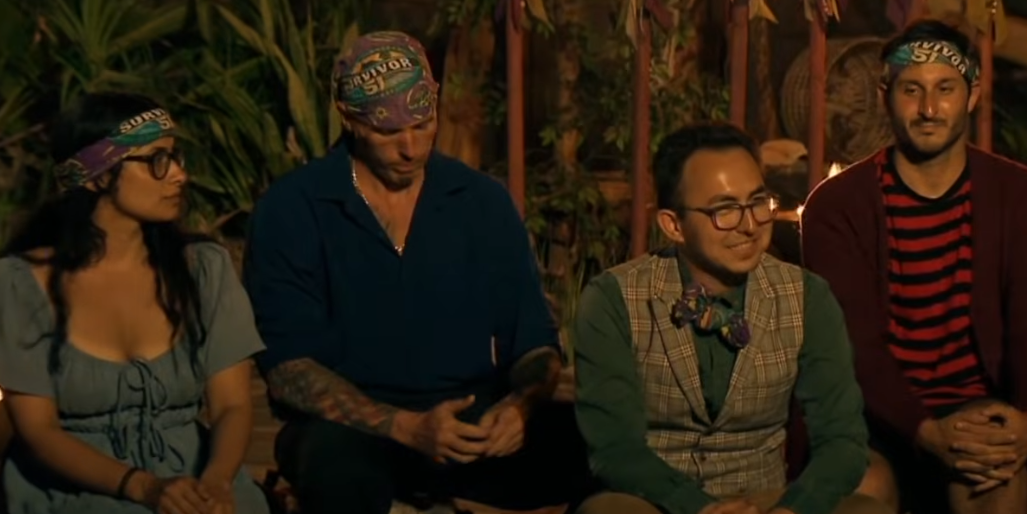
Even before his exit, Rob had already produced one of the stranger Tribal Councils of the season.
Hoping to protect his ally Eric Macksoud, he tried to write down his own name.
Unfortunately, Survivor has rules. One of them is that you can't vote for yourself.
A minor inconvenience, when your master plan involves eliminating yourself.
Rob was told to change his vote. And Ana Sani went home instead, leaving Rob without another key ally.
Let's review.
You're on Survivor. A game people spend years dreaming about. They apply over and over, train, study old seasons, and lie awake imagining how they'll outwit, outplay and outlast everyone.
And your strategy is to vote yourself out.
Somewhere, Sandra Diaz-Twine is wondering what planet we've landed on. Sandra's whole philosophy was "as long as it ain't me." Rob's appears to be "as long as it is me."
THE MEDICAL CHECK — The Doctors Cleared Him. Rob Checked Out.
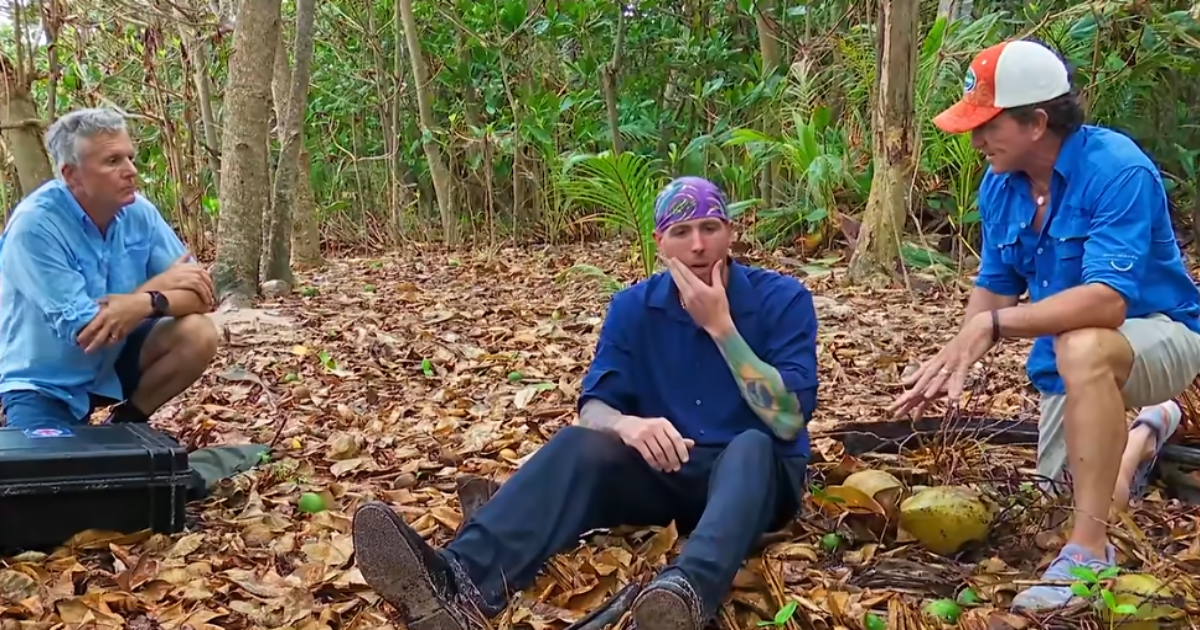
Rob's exit centered on a leg injury. He was worried about an infection and asked to be examined.
The medical team found a small cut. It did not find a condition requiring a medical evacuation.
That distinction matters.
A medical evacuation happens when the professionals decide a player can't safely continue. Rob wasn't medically evacuated. He made the decision to leave.
Now, pain is subjective. Nobody watching from their couch can measure how much discomfort another person is feeling, and Rob may genuinely have been frightened about his health.
But medical didn't order him out.
Which is why viewers are side-eyeing his insistence that he didn't quit. Because if you can keep playing and you decide not to, what exactly are we supposed to call it?
An early checkout?
A voluntary island relocation?
A strategic withdrawal from the concept of participation?
Survivor may need a brand-new exit category. Not eliminated. Not evacuated. Just done.
— Ava WittTHE PLOT THICKENS — Wait, He Didn't Tell the Doctor Everything?
Here's where the story takes an unexpected turn.
In an interview with TV Insider, Rob revealed that he'd been dealing with swollen lymph nodes, something he said he didn't mention during his medical examination.
Yes. You read that right.
By his own account, Rob was worried enough about his health to leave the game, but didn't tell the medical professional examining him about all of his symptoms.
That's certainly a creative approach to getting medical reassurance.
It's like taking your car to a mechanic, mentioning that the radio makes a funny noise, forgetting to tell him the engine is on fire, and being surprised when he sends you home with a clean bill of health.
To be clear, swollen lymph nodes can have lots of causes, and Rob's account doesn't establish what was actually happening medically.
But it does leave one obvious question hanging: if the symptoms were serious enough to end his game, why didn't he mention them all to the person whose job was to check?
It's a fair question, especially when his post-show explanations lean so heavily on how serious his health concerns were.
JEFF PROBST — Not Exactly Calling in the Helicopter.
Jeff Probst has seen just about everything. Injuries. Infections. Heat exhaustion. People pushing their bodies way past what most of us would consider reasonable for a buff and a bag of rice.
And, of course, players who simply decide they've had enough.
Jeff acknowledged that Rob's pain and worries could have been real. But he also made it clear the exit was Rob's decision, not a medical evacuation.
That's not a technicality. It's the difference between being told you can't continue and deciding you don't want to.
And Survivor has made that distinction increasingly visible. Voluntary exits no longer get the traditional torch-snuffing ceremony.
Which feels fitting. If you're leaving the game on your own, why should Jeff have to do the honors?
Maybe production should just hand you a boarding pass, a granola bar and a souvenir fridge magnet.
THE COMMENT WAR — "Let's Draw the Haters In." Mission Accomplished.
After the episode aired, Rob faced criticism from viewers who felt he'd abandoned the competition.
Rather than letting the controversy quietly fade, he decided to engage. Enthusiastically.
On Instagram, he posted a video mocking his critics, with the caption:
Let's draw the haters in lmaoooo.
— Rob Antonson, on InstagramWell. Mission accomplished. The haters have been drawn in. They brought snacks.
Rob has argued that viewers take the show too seriously, and keeps pushing back against the idea that his exit makes him a quitter.
And here's the beautiful irony.
He thinks people are taking Survivor too seriously.
While he keeps giving interviews and replying to strangers online about whether he quit Survivor.
Apparently, we're all supposed to move on.
Except Rob. Rob would very much like to keep discussing it. Preferably until everyone agrees with him.
Which, if you've spent five minutes in a Survivor Facebook group, tells you this is going to be a very, very long project.
THE OTHER SIDE — Jokes Aside, Rob's Account Deserves a Hearing.
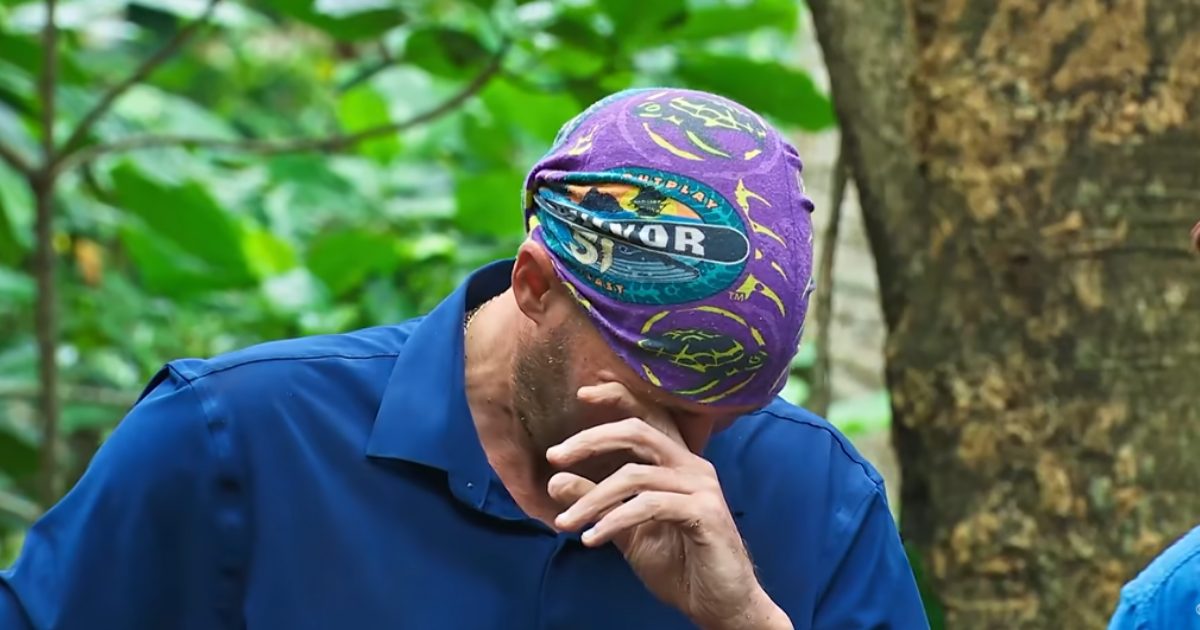
For all the jokes, Rob has shared some details that deserve real consideration.
He said he became emotional after leaving the game and cried while walking with Jeff Probst, a moment viewers didn't see in the episode.
He has also explained that leaving didn't mean rushing home to his family. According to Rob, he spent another eight days without any contact with them.
So the theory that he simply wanted to dash back to his kids doesn't match his account.
And there's an important difference between questioning someone's decision and accusing them of faking an injury. There is no evidence Rob invented his symptoms. He may have been frightened, overwhelmed, disappointed, or genuinely convinced something was wrong.
All of that deserves consideration.
None of it changes the central fact, though: he chose to leave a competition the medical team had not required him to leave.
And Survivor fans are entitled to call that what they believe it is.
MEANWHILE — Other Players Were Begging to Stay.
Part of the reason Rob's exit landed so badly is the contrast with players who kept going through their own physical problems.
Patt Cannaday, for example, talked about dealing with a painful shoulder infection during Survivor 51. She was furious about getting blindsided and made it very clear how badly she'd wanted to stay in the game.
Of course, no two injuries are the same, and pushing through a medical problem doesn't automatically make someone a better player. Nobody should ever be encouraged to ignore a serious health issue for the sake of television.
But Survivor is a game built on physical misery, psychological pressure and the stubborn determination to keep going when everything is awful. That's a big part of why people watch.
And it's why voluntary exits frustrate fans so much.
Thousands of people would give almost anything for a shot at that island. Most never get anywhere near it.
So when someone finally gets there and leaves early, people are going to have opinions.
Lots of them.
Welcome to reality television, Rob.
THE REAL CHALLENGE — Surviving the Comment Section.
Maybe Rob's biggest mistake wasn't leaving the game.
Maybe it was trying to convince the entire internet to use a different word for it.
Survivor fans can forgive almost anything. Terrible strategy. Bad alliances. Ridiculous advantages. Even voting out the one person who was genuinely trying to save you.
But voluntarily leaving the game, then arguing about the dictionary definition of quitting?
That's practically a formal invitation to the comment section.
Rob has every right to explain his decision. He has every right to defend himself against unfair personal attacks. And he absolutely has the right to put his health first.
But viewers also have the right to point out that he wasn't medically evacuated. He chose to go.
Maybe it was the right call for him. Maybe he genuinely believed something was wrong. Both things can be true.
Calling it something other than quitting just doesn't change what happened on the island.
Rob Antonson didn't get blindsided. He didn't lose a fire-making challenge. He wasn't medically pulled from the game.
He left.
And now he's fighting harder against the word "quitter" than he ever fought to stay on Survivor. At this rate, he might actually outlast the entire cast.
Just not on the island. 🍷