






What Survivor Australia Doesn't Show You. Including the Toilet Situation.

Australian Survivor sells itself as the realest show on television. Half of that is true. The hunger is real. The mental toll is real. But behind the torches and the dramatic music, there's a rulebook, a medical team, a writers' room and a porta-potty nobody seems to use. Let's follow a castaway from day one to the day after, and look at everything the edit leaves out.
On television, Australian Survivor looks simple. Behind the scenes, it's a very different story. Two dozen castaways get dropped on a beach with nothing. They starve, they scheme, they cry, and every few days one of them gets their torch snuffed. Pure, raw, unfiltered survival.
Well. Mostly raw. Lightly filtered.
The latest season, Redemption, was filmed over 45 days in Samoa in 2025 and crowned Caleb Beeby as Sole Survivor in 2026. The next one, Rivals, heads to Malaysia for the first time. And with every season, more castaways, producers and even the former host have let slip what actually happens when the dramatic music stops.
Some of it makes the show more impressive. Some of it makes it a little less magical. And some of it involves a ladder, and we'll get to that.
So let's do this properly. Day one to the day after. Here's what Australian Survivor behind the scenes really looks like.
Day One. You Arrive With Nothing. Well, Almost Nothing.
You really do start with very little. Castaways arrive in the clothes they're wearing, and that's it for the first few days. According to former players, they're later allowed to choose a handful of extra clothing items around day three. Five items, for more than a month. Choose wisely. That cute top is not going to keep the mosquitoes off.
What you don't see: the crew. Behind every shot of a lonely castaway staring at the ocean, there are camera operators, sound technicians, producers, medics and safety staff. The "deserted island" is one of the busiest workplaces in the Pacific. It's just very good at hiding in the bushes.
And the money? You are not doing this for free. Former contestant Lee Carseldine revealed in 2020 that castaways were paid around $90 a day. Which, for starving on camera for a month and a half, works out to roughly the price of one very sad brunch in Sydney. The real payday is the $500,000 prize. Only one person gets it.
The Food. Rice, Beans, and a Lot of Rain.
Here's the first thing the show doesn't really explain: castaways aren't technically given nothing to eat. Network 10 has confirmed that survivors receive a daily ration of rice and beans. Anything else, they have to catch or forage. Crabs, fish, papayas, coconuts. If you can find it, you can eat it.
Sounds manageable. It is not.
Rice and beans need to be cooked. Cooking needs fire. Fire needs dry wood. And tropical islands, it turns out, love rain. One castaway put it perfectly: "We get rice and beans, but obviously you need to cook those things and it rained so solidly." Translation: you can be holding your dinner and still go hungry.
Caleb Beeby, this year's winner, said that in the early days, his tribe "ate once the whole week and then [in the] second week we ate twice." He lost 14 kilos in four weeks. Fourteen. In four weeks. There are crash diets with better customer reviews.
So when you see a castaway weeping over a single grilled crab at a reward challenge? That's not overacting. That's the most honest moment of the episode.
The Cameras. No Camera, No Game.
This is the part most fans don't know, and it changes how you watch the whole show.
The cameras run all day, every day. But there's a rule behind that. According to former castaway Shonee Bowtell, "you're not allowed to go and look for idols if there are no cameras around." Players also can't talk strategy without a camera nearby.
Let that sink in. The sneaky late-night idol hunt? The whispered alliance by the water well? The game literally waits for a camera to show up. Imagine plotting a blindside, then having to pause mid-sentence because the cameraman went to the toilet. Very cloak-and-dagger. Very "hold that thought."
It makes sense. Production needs to capture the game, and nothing kills an episode faster than a huge twist nobody filmed. (The Challenge could learn something here.) But it also means Survivor's most "spontaneous" strategic moments happen on a schedule set by the crew, not the castaways.
And if you've ever wondered about stealing an idol: you can't take one out of someone's bag or off their body. But if a player leaves it lying around somewhere else? Fair game. Survivor rule number one: never leave your idol unattended. Survivor rule number two: see rule number one.
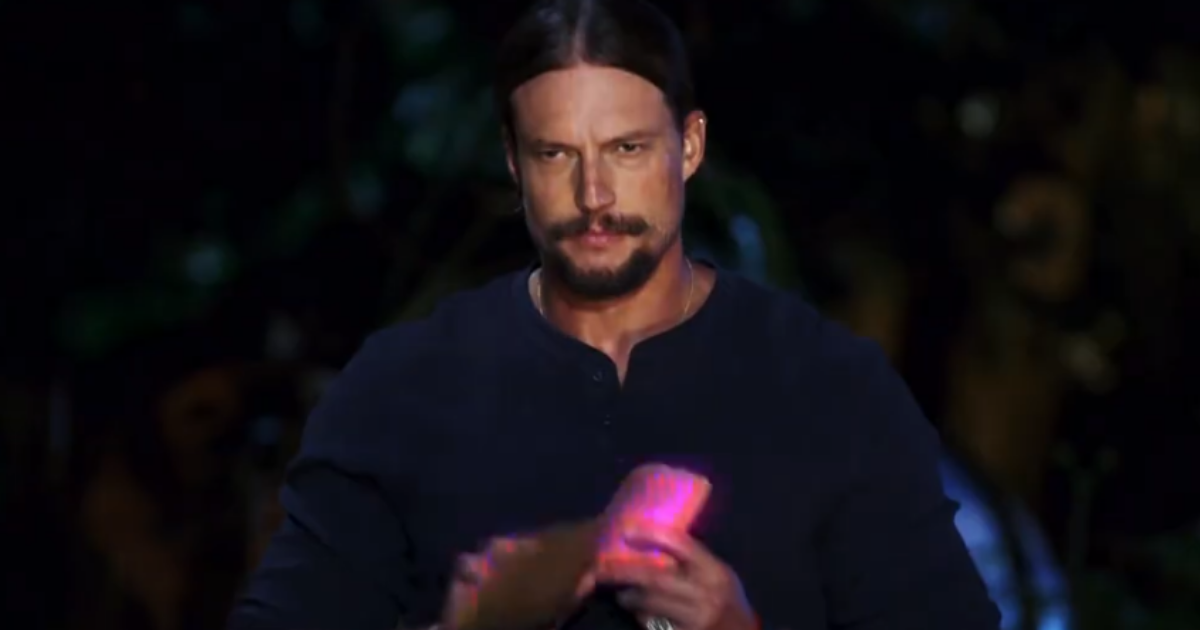
The Challenges and Tribal Council. Some of It Is Written. Some of It Is Fake Paper.
Challenges aren't rehearsed. Castaways see the course for the first time when they arrive, get a safety briefing and a walk-through, and that's it. No practice runs. So when someone falls off a balance beam in spectacular fashion, it's genuine. Wonderfully, painfully genuine.
The host's one-liners, on the other hand? Not so spontaneous. Former host Jonathan LaPaglia admitted his quips weren't "totally on the spot," and that he had "talented people" writing for him. So all those perfectly timed zingers at Tribal Council came with a writers' room. Somewhere in Sydney, someone got paid to write "the tribe has spoken" with extra drama.
Even the voting booth has a secret. That endless stack of paper castaways write their votes on? It's mostly an illusion. A Pedestrian editor who visited the set revealed there's only one real sheet on top, sitting on a flat surface designed to look like paper. It gives players something smooth to write on and makes the stack look bottomless. Harmless. But now you'll never unsee it.
And then there's the edit. Former player Peter Conte said after his season that "key facts are omitted, and storylines are warped." Shonee Bowtell put it more gently: Survivor is "entertainment," not a documentary. Weeks of round-the-clock footage get squeezed into a handful of episodes. Someone decides who's the hero, who's the villain, and who basically disappears until their exit interview.
The Toilet Situation. We Promised. Here It Is.
You're welcome, and we're sorry.
Officially, there are toilets. Jonathan LaPaglia confirmed that in Fiji there was "a porta-potty near their camp," though he admitted it wasn't "particularly great." For the Queensland seasons, a producer confirmed there was a porta-loo stocked with the bare essentials. Network 10 has also said female castaways have access to sanitary products.
Unofficially? Castaways go wherever nature calls. Australian player Nick Iadanza recalled that Sam Webb, from season one, "climbed up the ladder, pulled his pants down, and did a poo on the course." During a challenge. On a ladder. We have so many questions and we want none of them answered.
It's not just an Aussie thing. An American Survivor contestant said production actually scolded her tribe because the crew kept stepping in their poop while setting up interviews. So the next time you see a beautiful sunset shot of the beach, just know: you're not seeing everything. And honestly, that's one edit we fully support.
The Safety Net. The Team You Never See on Screen.
Here's where the "just survive" fantasy gets a reality check, and a good one.
Network 10 says there's a 24-hour medical team monitoring castaways and treating injuries. A psychologist is available during and after filming. "You can talk to the psych anytime you want," one player said. Personal medications are handed out by the medical team, and contraceptive pills can be taken as normal. Castaways even get SPF 50+ sunscreen, shipped over from Australia and reapplied throughout the day.
So no, you won't see anyone getting a sunscreen top-up between tribal alliances. It would ruin the aesthetic. But it's happening. The "starving, sunburnt castaway" is starving, yes. Sunburnt? Production would really prefer not.
We're not mocking this. It's the best part of the behind-the-scenes story. Reality TV has had its share of disasters, and a show that sends people into the jungle for 45 days should have a doctor on speed dial. Survivor does.
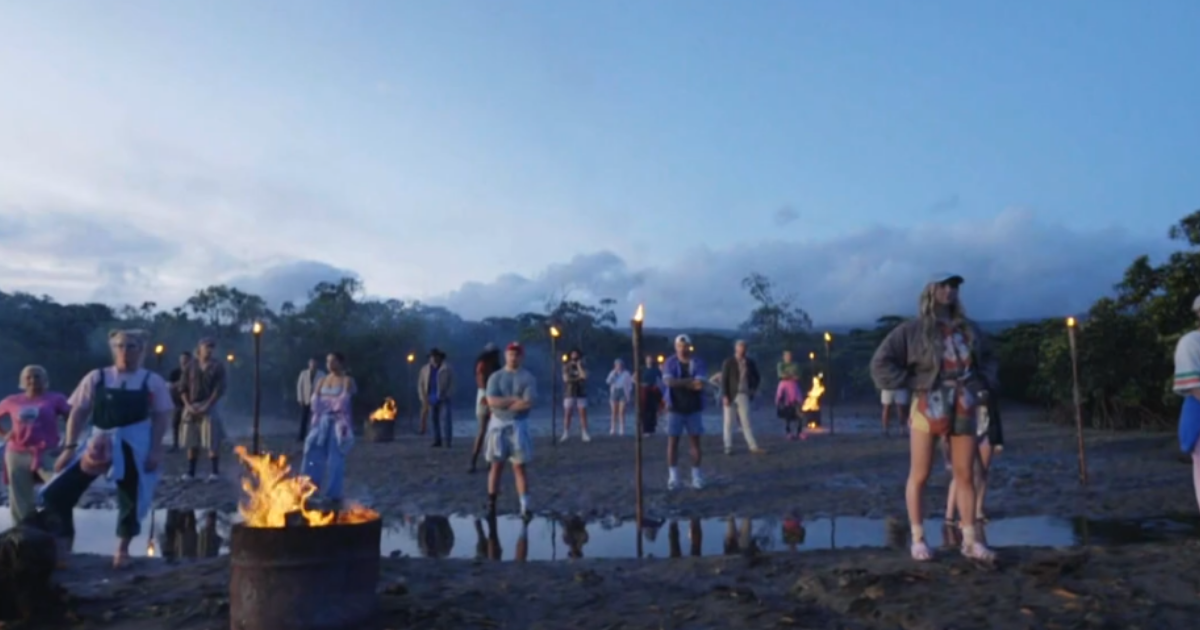
After the Vote. The Jury Villa Dinners From Hell.
Getting your torch snuffed doesn't always mean going home. Once the jury phase starts, voted-out players move into the Jury Villa, where they watch Tribal Councils and eventually decide who wins.
And if the clips released on 10Play are anything to go by, it is not a spa retreat. It's a series of extremely awkward dinners. Every new arrival walks into a table full of people who either voted them out or got voted out because of them. Accusations of lying. Alliances relitigated over dessert. One juror revealed that a player had been "playing dumb the whole time" and deliberately underperforming in challenges. Another arrival opened with: "Okay, what's the vibe here? Are we all angry at me?"
Honestly, give us a Jury Villa spin-off. We'd watch every episode.
The Day After. The Part Nobody Films.
This is where we drop the jokes for a moment.
The final Tribal Council ends. The winner is crowned. The cameras pack up. And for the castaways, the hardest part can start.
Caleb Beeby has been unusually open about it. After the final vote, he said he felt irritable and "a bit snappy at people." A psychologist explained it to him this way: "Your adrenaline has been at such a high level for so long — you have used all of your emotions on hyperdrive." He said it took about a month to feel normal again, and that at first he couldn't even stand being indoors. He also spoke honestly about struggling with his relationship with food after weeks of hunger, and working with a nutritionist provided by production.
That's the part no edit will ever show you. Forty-five days of hunger, paranoia and adrenaline don't switch off when the torch goes out. The show ends on a triumphant final shot. The castaways go home and have to relearn how to eat dinner at a normal table.
It's also, frankly, the most convincing proof that the experience is real. You can script a host's one-liners. You can fake a stack of paper. You can't fake losing 14 kilos and needing a month to feel like yourself again.
So, Is Australian Survivor Real? Yes. Just Not the Way You Think.
Knowing what happens behind the scenes doesn't ruin Australian Survivor. If anything, it makes it more impressive. These people really are starving, really are exhausted, and really are playing a brutal social game on almost no sleep. The safety net just means they come home in one piece.
What it should change is how much we trust the story. The game is real. The storyline is built. Somewhere between a camera rule, a writers' room and an editing suite, 45 days become a neat little narrative with heroes and villains. And that's worth remembering the next time you're screaming at your TV about a blindside.
Next stop: Rivals, in Malaysia, with the cast already paired up against their sworn enemies. New island. Same rice. Same beans. Hopefully a better toilet. 🍷