






Three Players Gone. Eighteen Words From TJ. Then a Food Challenge.
The biggest moment of The Challenge: Cutthroat happened off camera. Nelson, Leo and Josh were disqualified in a single sentence, and viewers had to piece together the rest from X posts, podcasts and spoiler accounts. It's the clearest sign yet of what the show has lost.
Episode seven of The Challenge: Cutthroat ended the way the best Challenge episodes used to end: chaos in the house, and TJ Lavin walking through the door. What came next was the season's triple DQ. For a week, fans speculated about what he had walked into, and who he had come for.
Episode eight aired on September 16 and answered the question in one sentence. Leo Dionicio, Josh Goldstein and Nelson Thomas were already gone. TJ gathered the remaining players and told them: "Leo, Nelson and Josh all broke the code of conduct here on The Challenge, so they're all gone."
Eighteen words. That was the entire explanation.
There was no footage of what happened, no confessionals, no exit interviews, and no indication of who had done what. The episode simply moved on. Chris and Anna Leigh were named the new captains. The teams rowed through a floating market for an eating challenge called "Mean Cuisine." Izzy Fairthorne lost to Cassidy in the Arena. And by the end of the night, TJ announced that the Blue and Gray teams would merge, because Blue no longer had enough men left to compete.
Three disqualifications reshaped the entire game. The show gave them less airtime than the menu.
Viewers ended up learning what happened the way you learn your cousin got divorced: on social media, in pieces, from people who were in the room. So let's put those pieces together. Because the story of this triple DQ is really two stories. One is about what happened in that house. The other is about what The Challenge decided we didn't need to see.
What Happened in the House. The Version We Had to Assemble.
Production has never explained the incident beyond TJ's announcement, and Paramount+ has not elaborated. What we know comes from spoiler accounts and from the people involved, and it's worth being clear about which is which.
According to spoiler accounts, the trouble started during a game of Uno. The reports say Leo used a racial slur, the N-word, during the game, and that Josh then repeated it. Nelson reportedly confronted Josh, the situation escalated in the kitchen, and dishes were broken. The same accounts say there was no physical fight, and that Nelson was moved to a hotel afterward. If you want the full picture of how this season plays out, we broke down every Season 42 spoiler here.
None of that has been confirmed by production. But part of it has been confirmed by the people who were there.
The broken dishes: confirmed by Nelson himself
Josh's private apology: according to Nelson
Leo's objection to his disqualification: Leo, on a podcast
The cast's reaction: Izzy, in interviews
Josh's public account: not yet given
Production's reasoning for each player: never given
That list tells its own story. The most consequential event of the season was explained by a spoiler account, an X thread, a podcast and a couple of interviews. The episode contributed eighteen words.
Three Men, Three Stories. One Sentence.
TJ's announcement put all three names in the same breath, as if they had done the same thing. Their own accounts suggest otherwise.
Nelson owns what he did. The day after the episode aired, Nelson posted on X that he "let my emotions take over, broke dishes, destroyed kitchen and violated the code of conduct." No excuses, no "I was provoked." For a franchise where players can spend a decade refusing to admit anything, that's notable.
He also said Josh had apologized to him privately by direct message, and that he was "giving him space to take ownership publicly." Then he added the line that spread across fan accounts: "Saying you have Black friends doesn't give you a pass to use the N-word. This goes beyond TV."
In other words, Nelson accepts responsibility for the kitchen. What he wants is for Josh to take responsibility for what set it off.
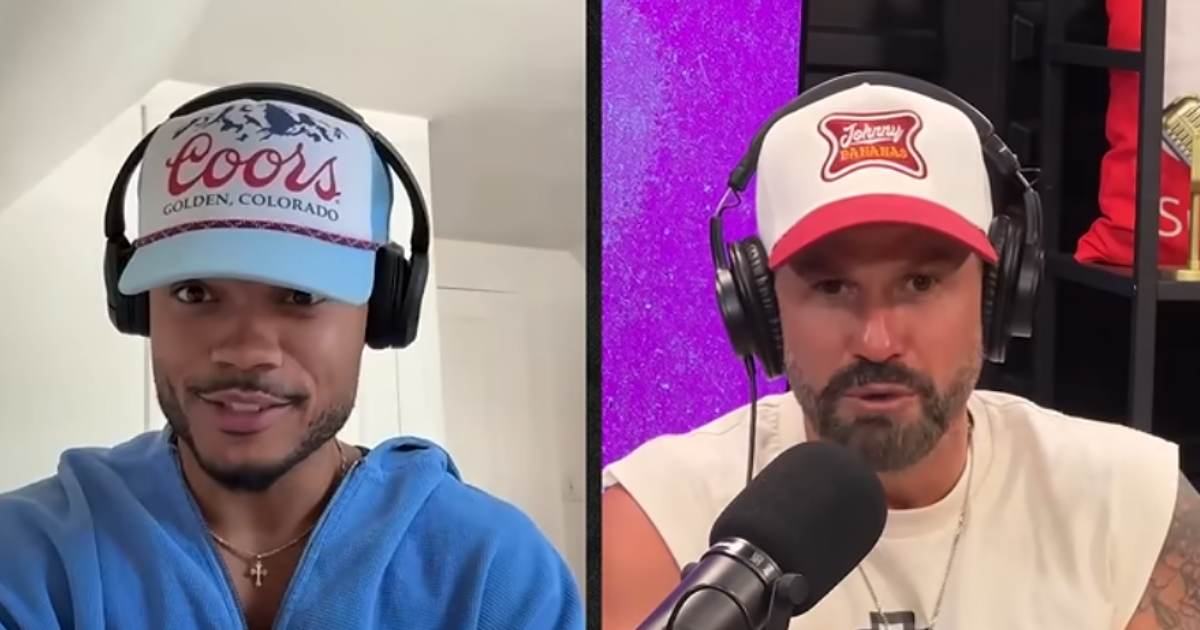
Leo disputes his removal. On Johnny Bananas' podcast, Death, Taxes, and Bananas, Leo said he was "really, really upset because what was said was super ignorant," and that "the hand I was dealt was pretty messed up considering I didn't really do (expletive) wrong." In his view, "someone else should have got fined and someone else should have got kicked out. But I didn't even think I should have been part of that mix."
Leo has also written on X that he is "without a doubt a black man," Afro-Latino and Dominican. That's relevant context in a dispute involving a racial slur. It doesn't settle what happened in the room, and it doesn't explain why production concluded he broke the rules. Castmate Theo has offered an account suggesting Leo was more involved than he says. Leo maintains he should not have been disqualified. Without production's explanation, there's no way for viewers to weigh the two.
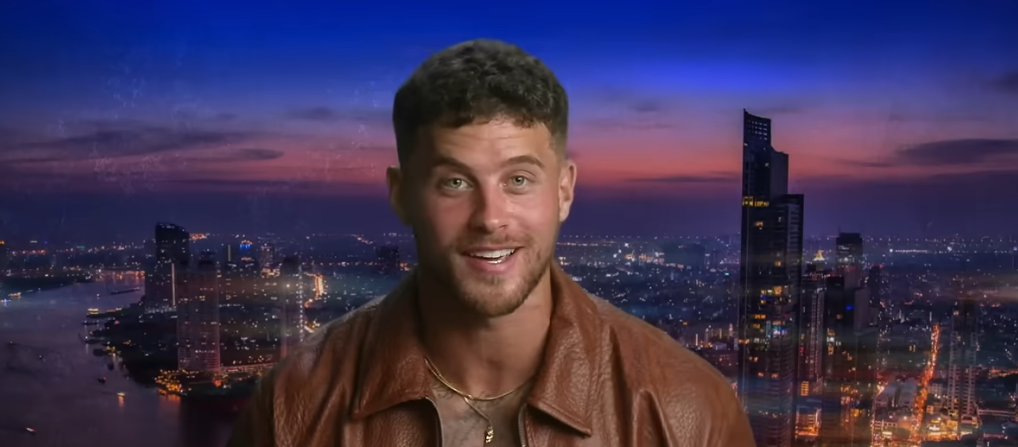
Josh hasn't addressed it publicly. Since filming wrapped, he has appeared on podcasts discussing his mindset, saying he "usually" flourishes in high-pressure situations and that "the only person that can save you, is you." What he hasn't done, at least publicly, is address the slur or respond to Nelson. According to Nelson, there was a private apology. The public one Nelson asked for hasn't arrived.
There is one point in production's favor. In 2023, Big Brother removed a houseguest for using the same slur, and faced criticism after another houseguest who had used the word days earlier was not punished. This time, if the reports are accurate, the rule was applied to everyone involved. You can debate whether Leo belonged in that group. It's harder to argue the rule was enforced selectively.
But enforcing a rule and explaining it are two different things. The show did the first. It skipped the second.
The House Was Shaken. On Screen, It Took Four Minutes to Recover.
On television, the remaining players regrouped almost immediately. New captains, strategy talks, then the eating challenge.
That's not how it felt inside the house, according to Izzy. She told TV Insider the cast was shocked and sad, that losing their friends disrupted the game, and that viewers didn't see all of that reaction. In a separate interview with Page Six, she said she hadn't witnessed the incident herself and didn't know why it was cut from the episode. She was careful not to tell a story that wasn't hers, which is more restraint than the internet has shown.
Other castmates were more blunt. Nurys wrote that she knew "MOST castmates are going to stay quiet about this situation because they're cowards with no back bones." Cara, asked about Josh during an Instagram Q&A, offered one line: "He shows his real cards soon."
So the players were shocked, some of them were angry, and the game itself was thrown off balance. Almost none of that made it to air. The show didn't only cut the incident. It cut the aftermath. This is a franchise that has built entire storylines out of people crying in hot tubs, and it chose to skip the one moment when the emotions were real.
Remember When The Challenge Let It Get Ugly? That's What We Miss.
To be fair, The Challenge has always been edited, and there was never a golden age when producers simply stepped aside. In 2020, Dee Nguyen was heavily edited out of the later episodes of Total Madness after MTV cut ties with her over comments made outside the show. Removing people from a season is nothing new.
But there's a difference between shaping a story and deleting it.
In 2017, Dirty Thirty aired Camila's drunken outburst, including racist remarks, in an episode literally titled "Rampage." The house reacted, Leroy responded, and the conflict was revisited at the reunion. The show didn't air every word or every angle, but the conflict and its consequences were part of the season. Viewers watched people deal with it, argued about it, and made up their own minds.
That's what's missing now. Nobody misses the slurs. What fans miss is the fallout: the tense dinner, the alliance that falls apart because two people can't look at each other, the veteran pulling a rookie aside, the reunion where someone finally says it out loud.
The old formula was simple. Someone says something terrible, the house erupts, TJ shows up, and we spend the next three episodes and a reunion watching everyone live with the consequences. The new formula, at least this time: someone says something terrible, the house erupts, TJ reads a short statement, and we move on to "Mean Cuisine."
We haven't found any public statement saying Paramount+ ordered this incident cut or introduced new rules for the show, so we're not going to pin it on the streamer. We can only describe what ended up on screen. And what ended up on screen was almost nothing.
The Pose Makes the Edit. The Real Moment Doesn't.
There's a bigger shift behind this, and the triple DQ happens to illustrate it perfectly.
The cast has changed. Many rookies now arrive from other reality shows with an audience, a social media strategy, and a pretty clear idea of the character they want to play. They know where the cameras are. They know which line will travel. Some seem to be auditioning for the villain role before they've unpacked. That's an impression from what reaches the screen, not a claim about anyone's private motives. But it's hard to miss.
The great Challenge villains of the past didn't choose the role. The house revealed them. You found out who someone was when things got hard, and that's why the rivalries felt earned and lasted for years.
Now look at what happened this season. For seven episodes, we watched players perform their characters. Then something real happened, a moment where nobody was performing, and that's exactly when the cameras went dark.
The result is a show that airs the pose and cuts the person. It keeps the manufactured drama and drops the real thing. That's reality television with the reality taken out.
It's Not Just The Challenge. Reality TV Has Become a Performance.
I'll be honest here, and a little personal. I'm old enough to remember when reality TV felt unfiltered. When people said the wrong thing and the camera stayed on them. When a fight at dinner turned into a three-episode storyline because nobody had figured out yet how to manage their image. It was messy, sometimes uncomfortable, and completely addictive. That's the TV I fell in love with, and a big part of the reason this site exists.
So it's genuinely hard to watch what it's turning into. Not because I want cruelty back. Because I want the truth back. And lately, the shows I love feel less like a window into other people's lives and more like a very expensive stage play.
If this only happened on The Challenge, it would just be a bad edit. But look around, and it starts to look like a genre-wide problem.
Reality TV used to cast people. Now it increasingly casts personalities. Contestants arrive with managers, brand deals, podcast plans and an audience waiting for clips. Some of them have clearly studied the show they're on the way an actor studies a script: where the confessional moment is, what gets a reaction, what gets a spin-off. Dating shows fill up with aspiring influencers. Franchise veterans treat each season like a contract negotiation. Housewives argue on camera about which storyline is "real" and which one was brought in to fill an episode.
At the same time, the shows themselves have become more careful. More polished. Some of that is genuinely good. Networks have introduced aftercare and duty-of-care policies after real tragedies, and no one should want a return to the days when producers poured alcohol into vulnerable people and called it entertainment. But somewhere along the way, "careful" started to mean "clean." Conflicts get resolved in a confessional. Scandals get summarized in a caption. The mess that made these shows worth watching is increasingly handled off screen, by lawyers and publicists, and delivered to us as a statement.
So we end up with the worst of both worlds: cast members who perform, and productions that tidy up. The fake part gets bigger. The real part gets smaller.
And every time a genuinely real moment breaks through, audiences prove how much they want it. When the Vanderpump Rules cheating scandal exploded in 2023, it became one of the biggest reality TV stories in years, precisely because nobody had planned it. Nobody was acting. It was messy, uncomfortable and real, and viewers could not look away.
That's the lesson the industry keeps forgetting. Viewers don't tune in for perfect people or perfectly managed storylines. They tune in for the moment the mask slips. The Challenge's triple DQ was exactly that moment. And the show chose to look away.
What One Sentence Did. And What It Could Have Done.
Grouping three names into one announcement had an effect, whether or not it was intended. It made three very different situations sound identical: a man who broke dishes, a man who says he didn't deserve to go, and a man who still hasn't given his side. Same sentence, same outcome, same eighteen words.
Production may well have had good reasons not to air a racial slur or a volatile confrontation. Nobody is asking for that footage on a loop. But protecting viewers from a slur and explaining a decision are not mutually exclusive. TJ could have given one sentence per player. The show could have aired a single confessional about how the house was feeling. Almost anything would have been more than what we got.
Instead, the key details came from Nelson's posts, Leo's podcast appearance, Izzy's interviews and a spoiler account. The episode ended up being the least informative version of its own biggest story.
We don't miss the slur. We miss the story: the context, the reactions, the uncomfortable aftermath that shows you who people really are. That was always the point of The Challenge, and of reality TV in general. The competition was the excuse. The house was the show.
This season, three players were removed, and the audience got new captains, an eating challenge and a team merger. For the human side of it, we had to go to X, to a podcast and to an Instagram Q&A. And we still don't have production's reasoning for any of the three decisions.
The Challenge doesn't have to broadcast every ugly second. But when it cuts the reality behind a decision this big, it leaves us watching the aftermath of a story we were never allowed to see. Some of us have been watching long enough to remember when the cameras stayed on. We'd like that show back. TJ, we love you. Next time, give us a few more words. 🍷